Context and evidence
Follow the question, requirements and sources behind an assessment, along with the outputs and checks presented for review.
Saga Oracle / Decision inspection
Inspect the evidence, findings and convergent outcomes behind a decision. Understand what was considered, where reviews differ and who is responsible for accepting the result.
Saga Oracle is the inspection surface for decisions. Its broader workbench direction connects the original intent to evidence, evaluations and the authorized outcome. The asset-trading workflow is its first application.
Follow the question, requirements and sources behind an assessment, along with the outputs and checks presented for review.
Compare assessments, see where they agree or differ, and retain unresolved gaps rather than lose them in a summary.
Understand which criteria were applied, who reviewed the result and which authority accepted it—or asked for more work.
Convergence / Multi-party review
Convergence is the decision process. In the broader work-review model, parties agree the scope and review criteria, evaluate the submitted outputs independently, and compare findings under declared rules. Disagreement can return for resolution and retesting. Agreement supports a decision; acceptance remains with the designated authority.
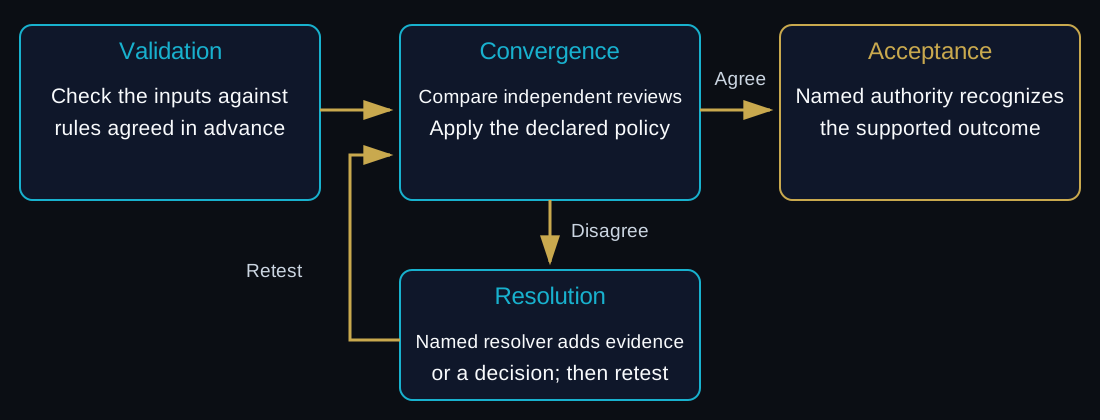
Start with the approved scope, requirements and acceptance criteria carried by the plan. Make the review rules and responsible parties explicit.
People or agents present the deliverable and its evidence. Finishing execution is a submission for review, not automatic acceptance.
Independent parties assess the same outputs against agreed criteria. Retain dissent and revised findings; the authorized reviewer or approving body decides acceptance.
Asset trading offers a concrete setting for repeated decisions, observable market inputs and a timestamped operating record. Explore why we started there and how the current workflow connects structural findings, convergent results and governed action.
Free SagaHalla membership includes the current Saga Oracle app at Validator. Operator and Allocator are paid upgrades. The broader decision workbench is in development; GitLab source access is coming soon.